The making of modern Qigong: Liu Guizhen, Tangshan and Beidaihe
How modern qigong was made in 1950s China: Liu Guizhen, neiyanggong, the Tangshan and Beidaihe sanatoriums, and what was kept, reworked and lost.
How modern qigong was made in 1950s China: Liu Guizhen, neiyanggong, the Tangshan and Beidaihe sanatoriums, and what was kept, reworked and lost.
What the classics say about quiet sitting and standing: the Neiye, Zhuangzi’s sitting in forgetting, Zhiyi, Zhu Xi, zhan zhuang and the Liu Zi Jue stance.

Where “internal” martial arts come from: Huang Zongxi’s 1669 epitaph, his son’s notes, the Zhang Sanfeng legend and Sun Lutang’s three internal arts.
Neidan, Daoist inner alchemy, for practitioners: waidan and neidan, the Cantong qi, Zhong-Lü, the Wuzhen pian, Quanzhen, and what it means for breath work.
Jing, qi and shen in plain words: early uses in the Neiye, Zhuangzi and Inner Classic, how they became the three treasures, and what neidan did with them.
The triple burner (san jiao) in the Nanjing, Lingshu and Suwen, the long debate over its form, its link to the sound xi, and why it is not the dantians.
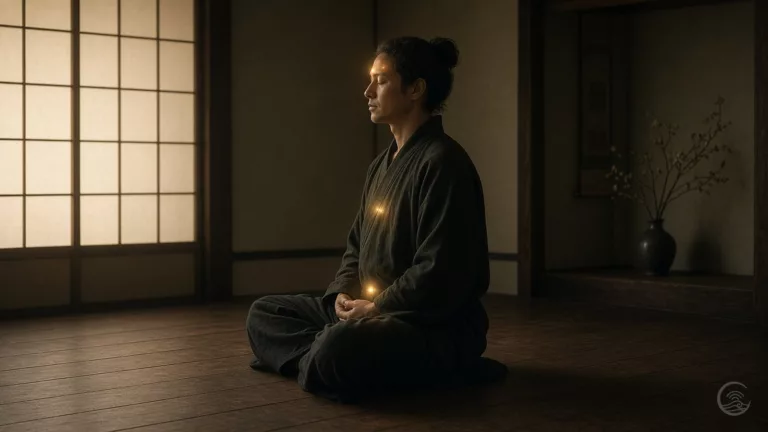
Where the upper, middle and lower dantian lie in the Baopuzi, the Yellow Court and other classics, how they differ, and why they are not the triple burner.
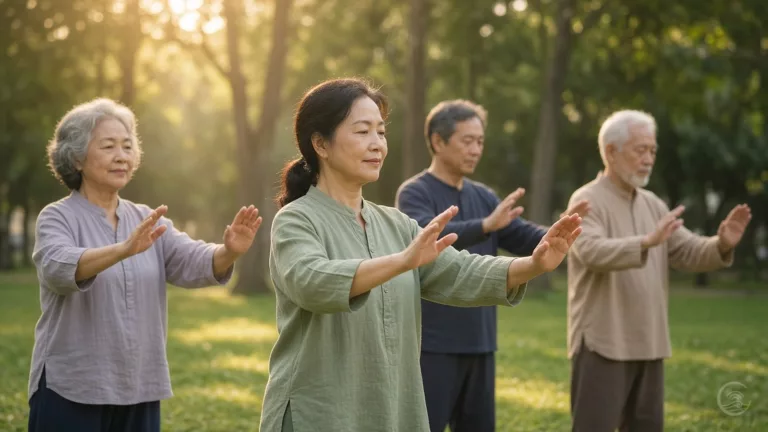
What qigong means: the modern word 气功, its roots in daoyin, the 1950s clinics, the qigong boom, China’s Health Qigong forms, and where Liu Zi Jue fits.
What tuna, xingqi, fuqi, lianqi and embryonic breathing mean in the Chinese classics, and where Liu Zi Jue’s “one way in, six ways out” fits.
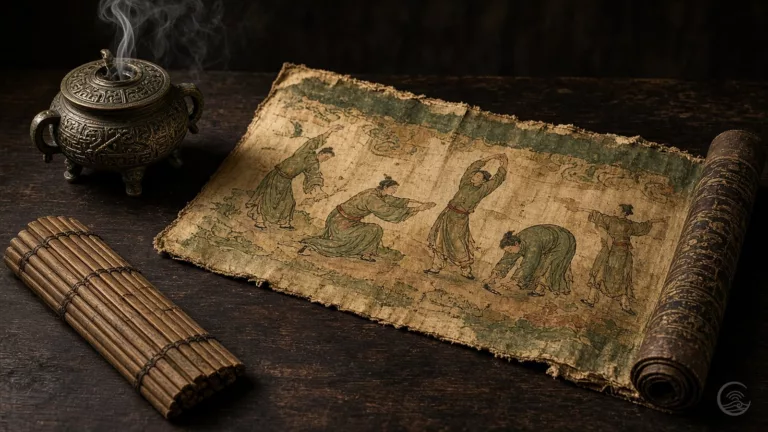
Daoyin, “guiding and pulling”: the Zhuangzi passage, the Mawangdui chart, the Zhangjiashan Yinshu, later manuals, and how it led to modern qigong.